
律政英雄
四川省公安厅召开“知识产权宣传周”新闻发布会_我的网站

一 |
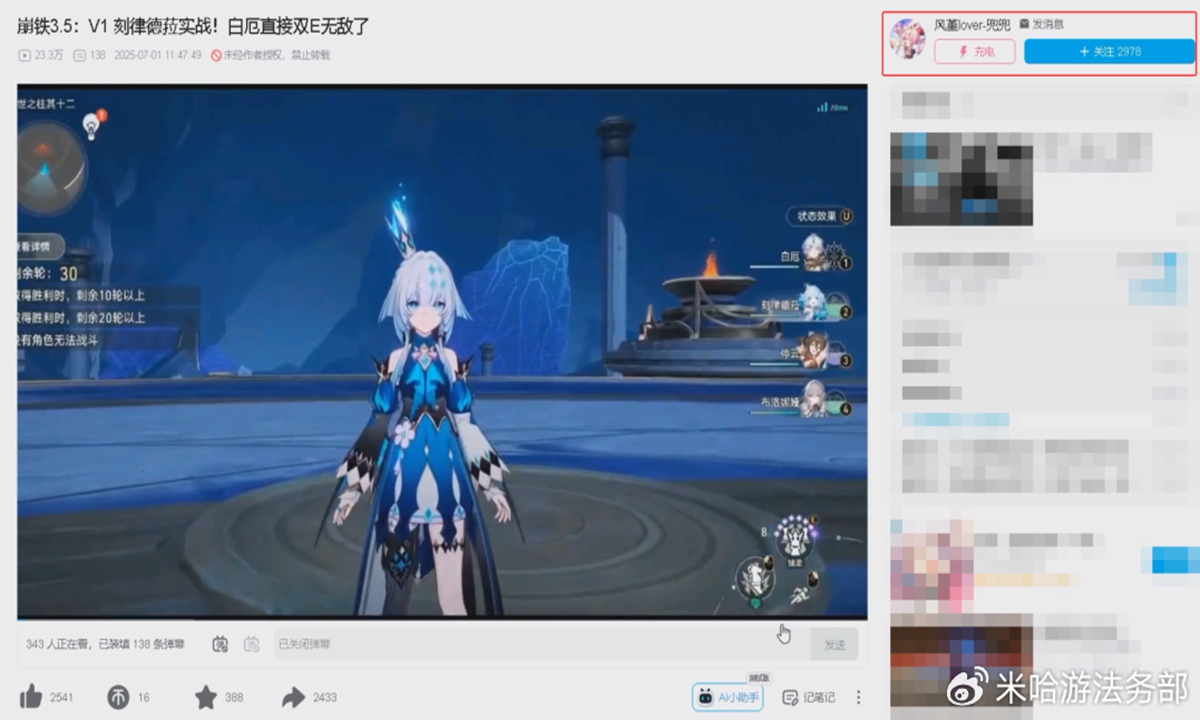
A criminal case involving information leaks related to miHoYo, the developer of Genshin Impact, has reached its first-instance verdict. Two Bilibili (Chinese video-sharing platform) users were found guilty of copyright infringement and were sentenced to one year and two months and one year in prison, respectively, both with probation. It is the first criminal game leak case under a new judicial interpretation issued by China's top judicial authorities, according to miHoYo.
The infringing videos uploaded by Su and Wu received more than 600,000 and 300,000 views, respectively, exceeding the criminal prosecution thresholds stipulated under the judicial interpretation. The court therefore found that the two individuals met the criteria for criminal prosecution and handed down guilty verdicts.
During routine monitoring, in July 2025, miHoYo discovered that Su and Wu had repeatedly uploaded gameplay videos featuring unreleased versions of miHoYo titles, including Genshin Impact, Honkai: Star Rail and Zenless Zone Zero, without any authorization from the company. The videos, widely circulated within gaming communities, exposed unreleased characters, skill animations and other content that had not yet been officially introduced to players, miHoYo noted.
After discovering the alleged violations, miHoYo reported the case to the police in accordance with legal procedures. Following an investigation, the police arrested the two individuals involved.
The case was publicly heard and the verdict was delivered on April 24, 2026. The court ruled that Su was to be sentenced to one year and two months in prison with probation, while Wu was sentenced to one year of detention with probation, according to miHoYo.
Guo Hao, a Beijing-based lawyer, told the Global Times on Thursday that a key significance of the case lies in its further clarification of how game leak cases can be assessed under the Criminal Law.
"In the past, game leaks were more often handled through civil infringement claims or breach-of-contract disputes. In this case, however, the court did not simply determine liability based on whether content was released ahead of schedule," Guo said. "Instead, it considered factors including the scale of dissemination, the nature of the leaked content and the impact caused, and determined that the conduct met the prosecution threshold for the crime of copyright infringement."
Similar game leak incidents have also occurred overseas in recent years. In October 2024, The Pokemon Company suffered a data breach that resulted in large amounts of internal information being leaked online, including employees' personal information, according to overseas media reports. Dubbed the "Teraleak" by the gaming community, the incident was reportedly one of the largest game-related leaks in recent years. The leaked materials reportedly included game source codes, details of future projects and other internal information, according to Nintendo Life, a UK-based gaming news outlet.
Earlier, Nintendo had pursued legal action over the leak of a Pokemon Sword and Shield strategy guide in 2019. According to gaming website Polygon, The Pokémon Company later reached a settlement with the two individuals responsible, who were required to pay $150,000 each in damages.
"From a player's perspective, there is a clear difference between game leaks and normal game discussions," Lu, a member from the Steam gaming community, told the Global Times on Thursday. "Players discussing and analyzing officially released information is part of gaming culture, but obtaining and spreading unreleased content through unauthorized channels can harm the efforts of developers and affect the experience of the entire player community."
Such concerns are also shared by game developers, who view unreleased content as a key part of their creative and commercial plans.
A post by miHoYo on its online account specifies that every unreleased frame of game content represents the design and refinement efforts of its creative teams, while also carrying players' expectations for upcoming updates. Unauthorized early exposure of such content not only infringes upon miHoYo's copyright interests, but also takes away the surprise that players should have when experiencing new content for the first time.
。 中国小康网讯 4月25日,四川省公安厅召开“知识产权宣传周”新闻发布会,通报一年来四川公安知识产权领域刑事保护工作总体情况,并发布“四川公安知识产权云警务”微信小程序。 2023年,四川公安相继部署开展了“昆仑”“新篇”“护品牌促发展”等系列专项行动,依法严厉打击各类制售假冒伪劣犯罪;积极开展“惠民利企”大走访活动,先后走访了6家行业协会和61家企业,高效便捷提供知识产权刑事保护服务;联合兄弟单位签订《跨区域重大案件联合挂牌督办机制》《白酒知识产权保护警务合作框架协议》等6项协作机制;立足川内品牌保护,保持对川烟、川酒领域犯罪打击力度不减,案件侦办覆盖了妇幼用品、汽车配件、建筑材料、电线电缆、消防器材、著作权、商业秘密等领域。 据了解,在“4·26”世界知识产权日来临之际,四川公安现发布成都“3·31”销售假冒注册商标的商品案、泸州“12·26”假冒注册商标案、德阳“3·16”假冒注册商标案、内江“7·25”侵犯著作权案、宜宾“5·06”侵犯商业秘密案和达州陈某等人假冒注册商标案6起典型案例,为经济社会高质量发展和高水平安全提供有力法治保障。

二 | 发布会上,对于企业如何有效保护自己的知识产权,四川省公安厅食药环侦总队政委张光辉表示,企业要从制度、规范和人才培养等多方面加强知识产权保护,通过培训提高员工知识产权保护意识,更要建立信息互通机制,与公安机关互通有关数据,积极协助公安机关打击知识产权犯罪。

三 | 据统计,2023年,四川公安共立案侦办知识产权领域案件1407起,移送起诉案件804起,移送起诉犯罪嫌疑人3107名,各项指标同比增长40%以上,打掉犯罪团伙220余个,端掉犯罪窝点近700个,涉案总金额40.2亿元,其中侦办公安部督办案件35起。

四 | 下一步,四川公安将重点打击涉四川品牌、四川制造、四川创新等侵犯四川企业知识产权犯罪,对突出领域犯罪开展规律特点分析研判,集中输出线索组织开展集群打击、规模化打击,对妇幼用品、消防器材等危害健康和生产生活安全的犯罪开展专项打击。同时,推动建设省内省外涉酒犯罪数据共享机制,升级打击假酒大数据实战平台,并在全省推广使用“四川公安知识产权云警务”,严厉打击侵犯著作权、商业秘密等影响创新创造的犯罪,不断优化营商环境。内江“7·25”侵犯著作权案泸州“12·26”假冒注册商标案德阳“3·16”假冒注册商标案达州陈某等人假冒注册商标案成都“3·31”销售假冒注册商标的商品案编辑:白羽卉。
Current article:http://cr0w37.feizengbubaipeirangnalouchuo.sbs/051b4/hhm0k.html
Published on:16:58:42
 中超:山东日照成为北京国安主场赛区
 “非常壮观”:科学家首次分析从小行星“龙宫”采集的岩石样本
 奕境曾清林谈“汽车召回”:是一个市场成熟的标志,但长期被误解成 " 质量不行 " 代名词
 IMF:美国赤字对全球经济构成“重大风险”
 清凉一夏!湖北体彩“快乐有凉方”消暑派对走进仙桃
 时隔153天,“消失的她”露面了